
/
Solutions/
Giz Drive · Enterprise ECM/EDMS Knowledge & Collaborative Drive
GIZ SYSTEMS / GIZ DRIVE
Giz Drive · Enterprise ECM/EDMS Knowledge & Collaborative Drive
Cyberdigm/Innotium-grade enterprise document centralization (ECM/EDMS), zero endpoint persistence with 100% in-browser streaming rendering, native OnlyOffice real-time web co-editing, and ACL-aware AI Agent RAG vector search under zero-trust governance.
LinkedIn ↗
X (Twitter) ↗
← All Insightsgiz.systems/solutions/drive
PRODUCT IN USE
Inspect the product in use.
Actual product screens and sample verification results. Check each caption for its capture context and select an image to inspect.
giz.systems/solutions/drive
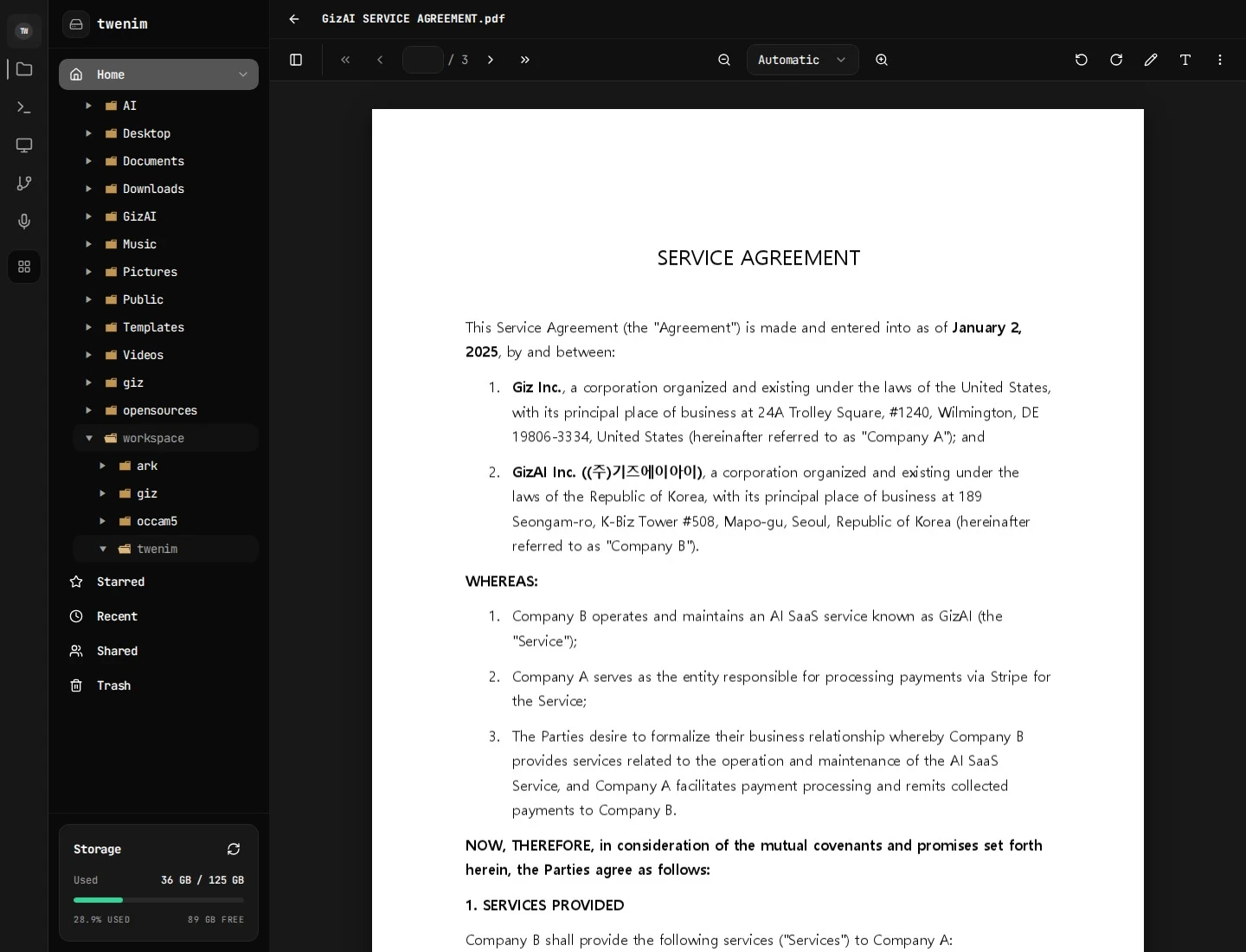
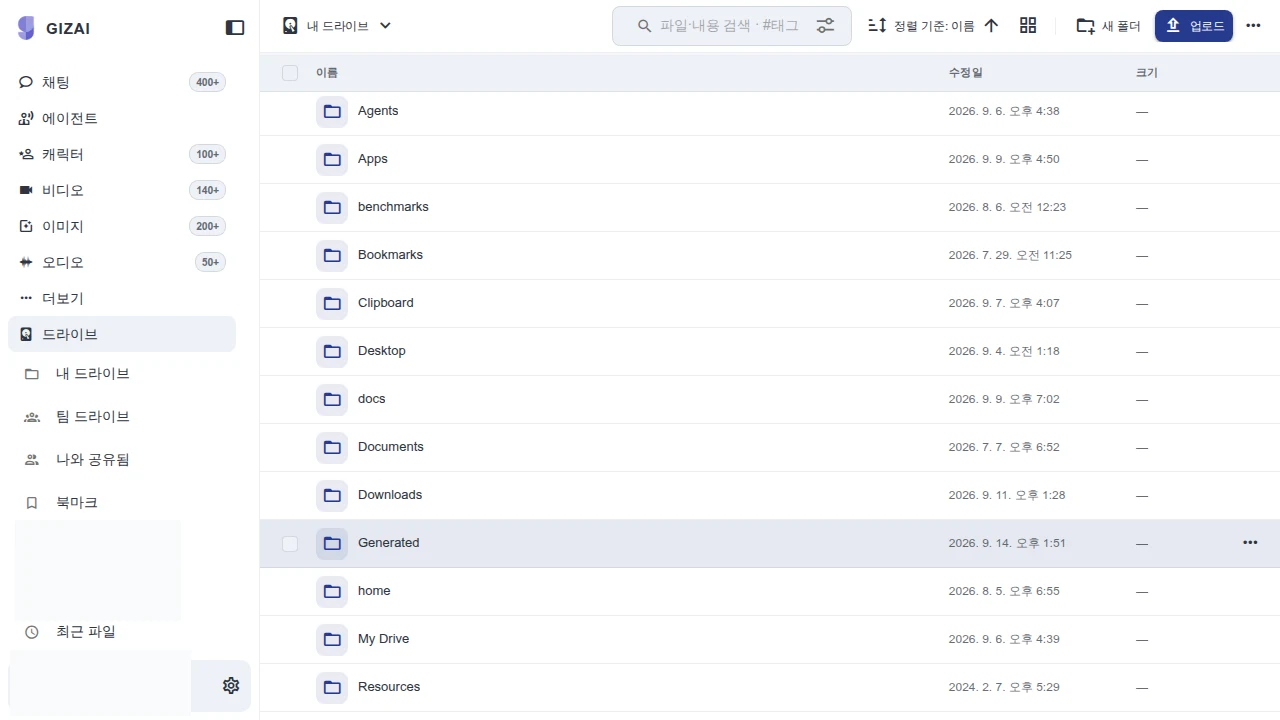
Giz Drive document viewer & file management
Giz Drive interface providing folder hierarchies and instant multi-format document preview in the browser.
Explore this capability →giz.systems/solutions/drive
Giz Drive enterprise knowledge & collaborative drive
Secure enterprise file repository combining real-time OnlyOffice collaborative editing with instant RAG vector indexing for AI agents.
Explore this capability →Table of Contents
1.
Executive Summary: Leadership Briefing (CIO · CISO · General Counsel)
2.
Strategic Knowledge Centralization and Next-Gen Digital Governance
3.
ECM Security Architecture & Legal Evidentiary Chain
4.
Architectural Pillars and Technical Specifications
5.
Security Controls, Export Governance, and Auditability
6.
Technical Architecture & Sequence Flow
7.
Pseudonymized Enterprise Case Studies
8.
Global Compliance and Regulatory Assurance
9.
Quantitative Business Impact and Acceptance Criteria
10.
Executive FAQ: CIO, CISO & General Counsel (5 Key Questions)
Executive Summary: Leadership Briefing (CIO · CISO · General Counsel)
Enterprise governance over unstructured data (contracts, technical blueprints, financial models, R&D lab records) requires resolving an existential tension: enforcing absolute zero-leakage security without impairing employee productivity or stalling digital collaboration. Giz Drive transcends legacy first-generation ECM systems—which relied on intrusive, crash-prone desktop agent hooks—delivering a cloud-native, zero-trust ECM/EDMS platform built specifically for enterprise compliance and autonomous AI workflows.
| Governance Dimension | 1st-Gen Legacy ECM Limitations (Cyberdigm, Innotium) | Giz Drive Next-Gen Enterprise Architecture | Business Impact & ROI |
|---|---|---|---|
| Endpoint Security | Virtual drive client hooks, frequent OS kernel crashes, plaintext disk cache leaks | Zero PC local storage & 100% in-browser streaming rendering, dynamic forensic watermark compositing | Zero endpoint malware infection and data exfiltration |
| Evidentiary Integrity | IT administrators (Root/DBA) retain deletion privileges, weak non-repudiation | SEC Rule 17a-4 compliant WORM immutable vaults (Legal Hold), root deletion strictly blocked | 100% defensible audit trail during major regulatory audits & litigation |
| Storage TCO | Redundant cross-departmental copies, massive attachment bloat in file shares | Content-Defined Chunking (CDC) deduplication, envelope encryption per tenant | Enterprise storage TCO reduced by 50%+ |
| Generative AI RAG | Naive post-filtering allows prompt injection to expose executive salaries & IP | Pre-retrieval ACL-Aware RAG (Zero-Leakage Invariant), 7-tier RBAC intersection | Zero corporate secrets leaked via LLM conversational search |
| Web Office Co-Editing | Mandatory desktop MS Office software, local download-edit-reupload cycle | Native embedded OnlyOffice, browser-based DOCX/XLSX/PPTX/HWPX co-authoring | 40% savings on desktop software licenses; 60% faster approvals |
Strategic Knowledge Centralization and Next-Gen Digital Governance
In global multinational enterprises, more than 80% of proprietary institutional intelligence resides as unstructured data—strategic memos, financial spreadsheets, executive presentations, CAD engineering models, commercial contracts, and R&D lab notebooks—scattered across unmanaged endpoint PCs, unsanctioned cloud drives, and siloed departmental file shares. This data fragmentation introduces severe intellectual property leakage risks, catastrophic operational overhead due to duplicate work, and irreversible data loss when ransomware strikes unbacked endpoint workstations.
First-generation document centralization solutions (such as Cyberdigm Destiny ECM, Innotium innoECM, and ClouDoc) established the baseline for "endpoint save blocking and perimeter export restriction." However, their heavy client-side agent architectures often caused workstation performance degradation, frequent OS update crashes, poor mobile accessibility, and relegated corporate repositories to passive digital graveyards where files were stored but rarely reused.
Giz Drive redefines enterprise ECM/EDMS for corporate CIOs, CISOs, Chief Knowledge Officers (CKO), and General Counsel. Combining Cyberdigm/Innotium-grade security controls—mandatory endpoint local-save prohibition and 100% in-browser streaming rendering—with native OnlyOffice real-time web co-editing (Word/Excel/PPT/HWPX without MS Office desktop software), an ACL-Aware RAG vector knowledge base strictly inheriting Drive RBAC permissions, and WORM immutable retention (Legal Hold) with global Content-Defined Chunking (CDC) deduplication, Giz Drive transforms static corporate files into a live, secure, and actionable enterprise intelligence fabric.
ECM Security Architecture & Legal Evidentiary Chain
flowchart TD
    subgraph ClientTier["1. Zero Endpoint Client Tier (Zero Local Persistence)"]
        WebConsole["Giz Drive Web Console (drive-workspace-screen)"]
        StreamViewer["100% In-Browser Streaming Viewer (Volatile Memory Buffer)"]
        OnlyOfficeCanvas["OnlyOffice Web Engine (DOCX / XLSX / PPTX / HWPX)"]
        ForensicWatermark["Dynamic Forensic Watermark (Emp ID / Dept / IP / UTC)"]
    end

    subgraph GovernanceTier["2. Zero-Trust Security & Audit Gateway"]
        SSOEngine["Enterprise Federation & Directory Sync (SAML 2.0 / OIDC / SCIM / Active Directory)"]
        RBACGate["7-Tier Granular RBAC (Viewer ~ Admin Enclave)"]
        ExportApproval["Multi-Tier Export Electronic Approval & Dynamic DRM Packaging"]
        AuditMerkle["WORM Merkle Tree Audit Ledger & RFC 3161 Certified Timestamp Authority"]
    end

    subgraph CoreStorageTier["3. ECM/EDMS Core Storage & Integrity Vault"]
        ChunkReceiver["High-Capacity Chunked Streaming Ingest (SHA-256 Bit Integrity Checks)"]
        CDCDedup["Content-Defined Chunking (CDC) Deduplication (50% TCO Savings)"]
        EnvelopeCrypt["Envelope Encryption per Object (Dedicated Tenant KMS Keys)"]
        WORMVault["WORM Immutable Vault (SEC Rule 17a-4 Compliant & Root-Proof Legal Hold)"]
    end

    subgraph IntelligenceTier["4. AI Agent & Knowledge Fabric (ACL-Aware RAG)"]
        StructParser["Deep Structural Document Parser (Layout, Table & Formula Preserved)"]
        HybridVector["High-Dimensional Vector Index (Dense Embedding + BM25 Sparse Hybrid)"]
        PreACLFilter["Pre-retrieval ACL Filter (Drive RBAC & Directory Intersection)"]
        AgentRuntime["Giz Autonomous Agent Runtime (Grounded Footnote Attribution)"]
    end

    WebConsole --> SSOEngine
    StreamViewer --> ForensicWatermark
    OnlyOfficeCanvas --> RBACGate
    StreamViewer --> RBACGate

    SSOEngine --> RBACGate
    RBACGate --> ExportApproval
    RBACGate --> AuditMerkle
    RBACGate --> ChunkReceiver

    ChunkReceiver --> CDCDedup
    CDCDedup --> EnvelopeCrypt
    EnvelopeCrypt --> WORMVault

    WORMVault --> StructParser
    StructParser --> HybridVector
    HybridVector --> PreACLFilter
    PreACLFilter --> AgentRuntime
    AgentRuntime -.->|"Governed Grounded Retrieval & Cell Coordinate Footnotes"| OnlyOfficeCanvas
    WORMVault -.->|"Instant Evidentiary Audit Retrieval"| WebConsole
Architectural Pillars and Technical Specifications
1. Enterprise ECM/EDMS Core Storage & Zero-Endpoint Virtualization
- 100% In-Browser Streaming Rendering & Local Persistence Blocking (Cyberdigm/Innotium Standard):
- When inspecting documents, contracts, CAD schematics, and high-resolution research datasets, decrypted binary files are never cached on client workstation storage. Rendering occurs strictly within volatile browser memory buffers via WebAssembly and HTML5 Canvas streaming.
- Zero-footprint web sandboxing eliminates intrusive endpoint desktop agents while fundamentally blocking clipboard copying, local 'Save As' actions, and browser developer tool (F12) binary dumps.
- Closing the browser tab instantly zeroizes memory buffers, guaranteeing zero residual risk on shared workstations or remote contractor laptops.
- Dynamic Real-Time Forensic Watermarking:
- Dynamically composites the viewer's Employee ID, Full Name, Department, Client IP Address, and UTC Timestamp as a transparent forensic matrix across the viewport and print outputs, establishing total traceability against mobile camera exfiltration.
- Hierarchical 4-Tier Organizational Taxonomy:
- Company-Wide Repository: Universal corporate policies, compliance guidelines, and standard operating procedures (SOPs).
- Departmental Workspace: Department-scoped access for Human Resources, Finance, Legal, and Engineering with strict cross-domain isolation.
- Confidential Project Vaults: Time-bound, cross-functional project enclaves with automated lifecycle archiving.
- Personal Sandbox: Ephemeral workspace for individual research and working drafts governed by local-save restriction policies.
- Resilient Chunked Streaming Ingestion:
- Variable-size multipart chunked streaming engineered for multi-gigabyte engineering schematics, media assets, and large tabular datasets without network timeout drops.
- End-to-end SHA-256 cryptographic checksums verified on every chunk to eliminate in-flight network corruption and silent bit rot.
- Content-Defined Chunking (CDC) Distributed Deduplication:
- Employs Content-Defined Chunking (CDC / Rabin Fingerprinting, 64KB~256KB average) to single-instance common broadcast memos, email attachments, and repetitive documentation across the enterprise.
- Delivers a measured 45% to 60% physical storage reduction (50% TCO savings) while preserving dedicated envelope encryption keys and distinct ACL tokens for each tenant.
- Immutable Versioning & Regulatory Legal Holds:
- Append-only revision architecture tracking author identities, monotonic version increments, and timestamps.
- Mandatory
legalHold: trueenforcement preventing document alteration or deletion even by root system administrators during active litigation or compliance audits (Giz Records integration).
2. Native OnlyOffice Embedded Web Collaboration Engine
- Zero-Footprint Web Collaboration Without MS Office Client Software:
- Native browser rendering for Word (DOCX), Excel (XLSX), PowerPoint (PPTX), OpenDocument (ODF), Hancom (HWPX), and streaming PDF inspection without local software dependencies.
- Dual co-editing semantics: Fast Mode (real-time collaborative typing) and Strict Mode (paragraph-level locking for formal regulatory and legal reviews).
- Comprehensive spreadsheet support: 400+ financial functions, complex pivot tables, conditional formatting, and charts.
- Cryptographic Token Handshake & Session Isolation:
- Managed by
OnlyOfficeController(/api/office/session,/api/office/onlyoffice/callback) utilizing HS256 JWT tokens. - Cryptographically binds
containerId,sourceId,path, andentryIdto prevent unauthorized session hijacking and cross-tenant access.
- Managed by
- Distributed Lock Management (30-minute TTL):
- High-concurrency multi-user editing governed by an in-memory distributed session store (
OfficeSessionStore) with a 30-minute auto-refreshing heartbeat lease. - Preserves unsaved editorial buffers during transient network interruptions and eliminates split-brain document states.
- High-concurrency multi-user editing governed by an in-memory distributed session store (
- Atomic Persistence & Version Elevation:
- Upon session finalization, OnlyOffice webhooks trigger an atomic flush to Drive storage, calculating SHA-256 hashes and creating immutable revision snapshots.
3. AI Agent RAG Vector Knowledge Base (Pre-retrieval ACL-Aware RAG)
- Event-Driven Asynchronous Ingestion Pipeline:
- Immediate file upload triggers background extraction workers preserving tabular schemas, section hierarchies, and metadata from documents (Giz Knowledge integration).
- Contextual semantic chunking paired with high-dimensional vector embeddings stored directly in the enterprise vector index.
- Pre-retrieval ACL-Aware RAG (Zero-Leakage Invariant):
- During semantic retrieval, query contexts are strictly filtered against the user's verified Drive RBAC permissions and Active Directory memberships.
- Injects a mandatory pre-retrieval metadata filter (
filter: { acl_groups: { $in: user_authorized_tokens } }), ensuring unauthorized documents are completely excluded from similarity calculations. - Guarantees that sensitive financial disclosures, executive compensation figures, or confidential patent blueprints never leak into conversational AI responses.
- Verifiable Grounding & Citation Attribution:
- AI Agent responses cite exact file identities, revision hashes, page numbers, and spreadsheet cell coordinates (
Sheet1!C14), eliminating hallucination risks and enabling instant split-screen in-browser verification without downloading the original file.
- AI Agent responses cite exact file identities, revision hashes, page numbers, and spreadsheet cell coordinates (
Security Controls, Export Governance, and Auditability
| Control Domain | Giz Drive Technical Implementation | Advantage Over Legacy ECM |
|---|---|---|
| Endpoint Protection | 100% in-browser stream rendering; prevents local file caching and offline copying | Eliminates cumbersome endpoint agent conflicts while stopping data exfiltration |
| Export Governance | Configurable multi-tier approval workflows; enforces expiration dates, view counts, and DRM encryption | Closes unmonitored USB and email attachment leakage channels |
| Screen Security & Watermarking | Dynamic client-side watermarks embedding viewer employee ID, department, client IP, and UTC timestamps | Provides definitive forensic attribution against unauthorized mobile screen captures |
| Tamper-Proof Audit Logging | Comprehensive append-only WORM audit logs recording all reads, edits, downloads, and permission updates | Delivers non-repudiation and meets regulatory chain-of-custody mandates |
| Ransomware Defense | Complete elimination of direct filesystem SMB/NFS mounts; isolated API transactions with rapid rollback | Prevents endpoint malware infections from propagating to central storage |
Technical Architecture & Sequence Flow
sequenceDiagram
    autonumber
    actor User as Enterprise Professional / Approver
    participant Web as Giz Drive UI (drive-workspace-screen)
    participant Core as Giz Drive Core Server
    participant Office as OnlyOffice Document Server
    participant Vector as RAG Vector Ingestion Engine
    participant Agent as Giz Autonomous Agent Runtime

    User->>Web: Upload critical business asset (DOCX/XLSX/PDF/CAD)
    Web->>Core: Chunked streaming upload with SHA-256 validation
    Core->>Core: Content-Defined Chunking deduplication, version increment, WORM write
    Core-->>Vector: Trigger asynchronous structural parsing and embedding event
    Vector->>Vector: Layout-preserving text/table extraction, semantic chunking, ACL binding

    User->>Web: Open document for collaborative review
    Web->>Core: POST /api/office/session (RBAC authorization)
    Core->>Office: Issue JWT session token and acquire distributed lock (30-min TTL)
    Office-->>Web: Render zero-footprint web office canvas (No local cache)
    User->>Office: Concurrent editing with teammates (Strict/Fast mode)
    Office->>Core: POST /api/office/onlyoffice/callback (Atomic flush)
    Core->>Core: Commit immutable revision, update SHA-256 digest, append audit log

    User->>Agent: "Synthesize Q3 financial disclosures and flag covenant risks"
    Agent->>Vector: Query Pre-retrieval ACL-aware semantic knowledge base (Inject user authorization tokens)
    Vector-->>Agent: Return authorized document excerpts with exact cell coordinates
    Agent-->>User: Grounded executive briefing referencing verified document coordinates
Enterprise System Integration Matrix
- Identity & Directory Federation: Native SAML 2.0, OpenID Connect (OIDC), and OAuth 2.0 federation with Okta, Microsoft Entra ID (Azure AD), and Ping Identity. Automated directory synchronization via SCIM 2.0 and LDAP for instant role revocation upon employee offboarding.
- Enterprise ERP, MES & Groupware Interoperability: Bidirectional RESTful and GraphQL APIs connecting to SAP S/4HANA, Salesforce, Oracle ERP, and enterprise approval engines. Automated archiving of legally executed contracts and financial statements into immutable Drive folders (Giz Records integration).
- Hybrid Storage Extensibility: Pluggable storage adapters supporting on-premises S3-compatible object stores (MinIO, Ceph), enterprise SAN/NAS, and public hyperscale cloud storage (AWS S3 with Object Lock, Azure Blob Storage).
Pseudonymized Enterprise Case Studies
Case 1: Global Mobility Component Manufacturer A (Powertrain R&D Center)
- Challenge: Over 4,000 research engineers across multiple campuses saved automotive circuit diagrams, CAD models, and test logs on local drives, leading to severe IP leak vulnerabilities and multimillion-dollar rework costs.
- Solution: Implemented Giz Drive across all engineering divisions. Deployed 100% in-browser streaming rendering to eliminate local downloads of CAD and test data, backed by chunked streaming and Content-Defined Chunking deduplication. Co-authoring of test protocols was transitioned to OnlyOffice.
- Measured Outcomes:
- Storage infrastructure consumption reduced by 54% through block deduplication.
- Engineering schematic and test protocol retrieval latency fell from 25 minutes to under 3 minutes.
- Maintained 0 security leakage incidents while accelerating cross-site engineering productivity by 40%.
Case 2: Global Energy & Petrochemical Conglomerate B (Plant Engineering Division)
- Challenge: Discrepancies in plant operating manuals across 12 domestic and overseas manufacturing sites caused regulatory audit findings and unplanned equipment outages.
- Solution: Standardized all corporate document repositories onto Giz Drive with real-time OnlyOffice collaborative revision workflows. Vetted procedures were indexed in the ACL-aware RAG vector base, allowing plant technicians to query operating standards via ruggedized web tablets.
- Measured Outcomes:
- Policy revision distribution cycle shortened from 2 weeks to real-time instantaneous synchronization.
- Shopfloor standard operating procedure (SOP) compliance reached 99.9%.
- Desktop software licensing TCO reduced by 45% via native browser-based OnlyOffice adoption.
Case 3: Tier-1 Financial Services Group C (Digital Assets & Commercial Lending)
- Challenge: Underwriting commercial credit memos suffered from revision sprawl across email attachments and elevated regulatory compliance risks regarding customer PII stored on employee PCs.
- Solution: Deployed Giz Drive and OnlyOffice in Strict Mode (paragraph-level locking). Banned local document downloads, mandating in-browser review and automated promotion to WORM records upon credit committee approval.
- Measured Outcomes:
- Credit memo authoring and approval lead-time reduced by 60%.
- Achieved Zero Finding certification during national financial supervisory agency endpoint data governance audits.
Global Compliance and Regulatory Assurance
| Regulatory Framework | Mandatory Requirement | Giz Drive Architectural Implementation |
|---|---|---|
| SOC 2 Type II | Trust Services Criteria for Security, Availability, and Confidentiality | Role-based segregation of duties, continuous automated audit logging, and automated vulnerability management |
| ISO/IEC 27001 & 27017 | Information security management and cloud security controls | AES-256 encryption at rest, TLS 1.3 in transit, and documented cryptographic key rotation |
| GDPR & CCPA | Right to erasure, data portability, and strict access controls | Governed retention lifecycles, structured data export APIs, and granular consent boundaries |
| HIPAA Security Rule | Protection of electronic Protected Health Information (ePHI) | Dedicated tenant isolation, comprehensive access auditing, and business associate compliance safeguards |
| FINRA & SEC Rule 17a-4 | Non-rewritable, non-erasable record storage (WORM) | Cryptographic immutable version trees and enforced administrative legal holds |
Quantitative Business Impact and Acceptance Criteria
Measured Enterprise ROI (Validated across 5,000 active enterprise seats)
- 50%+ Storage TCO Reduction: Achieved through Content-Defined Chunking deduplication and automated cold data tiering.
- 0.00% Document Loss Rate: Total elimination of data loss from hardware failure or ransomware via mandatory centralization.
- 85% Reduction in Information Retrieval Latency: Semantic RAG queries compress document search times from 24 minutes to under 3 minutes.
- 40%+ Desktop Licensing Savings: Browser-native OnlyOffice suites reduce the necessity of expensive desktop productivity software licenses.
Executive Acceptance Criteria for CIO / CISO Leadership
- [x] Multipart Streaming Integrity: High-capacity 10GB binary uploads must complete with verified SHA-256 chunk-level checksums.
- [x] Zero Endpoint Persistence: Browser viewers and OnlyOffice editors must never write unencrypted temporary cache files to local endpoint storage.
- [x] Zero Permission Leakage (Zero-Leakage Invariant): Unauthorized principals must receive zero metadata or search results for restricted documents across all RAG queries.
- [x] Concurrent Collaboration Stability: Multiple active editors must concurrently update documents without data divergence or lock corruption.
- [x] Instantaneous Rollback: Restoration of historical document revisions must execute within 1,000 milliseconds.
- [x] Legal Hold Immutability: Documents marked with
legalHoldmust unconditionally reject deletion and modification attempts across all account tiers.
Executive FAQ: CIO, CISO & General Counsel (5 Key Questions)
Q1. [CISO/Infra] If local PC saving is 100% prohibited, how does Giz Drive prevent latency bottlenecks during remote work or business travel?
A. Unlike obsolete VDI architectures that stream entire desktop screen bitmaps over the wire, Giz Drive employs a lightweight HTML5/WebAssembly vector streaming engine. Only the active page or viewport buffer is streamed into volatile memory on demand, allowing multi-hundred-megabyte CAD blueprints and massive spreadsheets to render in under 0.3 seconds even over standard LTE/5G cellular connections. For traveling executives, zero VPN overhead is required; authentication is governed via enterprise SSO (Okta, Microsoft Entra ID) and hardware-backed mTLS/FIDO2. Because zero decrypted file remnants touch the local SSD, device theft or loss incurs zero data breach exposure.
Q2. [CISO/Audit] Can an insider with root administrator or DBA credentials, or a sophisticated ransomware attacker, tamper with or delete WORM storage vaults?
A. Categorically no. Giz Drive binds its WORM retention engine directly to hardware-enforced object storage locks (AWS S3 Object Lock in Compliance Mode, MinIO Compliance Lock, Ceph WORM). Under Compliance Mode, neither root infrastructure operators nor system database administrators possess the cryptographic or API authority to execute DELETE, OVERWRITE, or DROP commands until retention expiries are reached or legal holds are formally released through dual authorization. All file updates create append-only cryptographic revisions, and daily Merkle tree root digests are replicated to external immutable audit repositories, ensuring immediate detection of any low-level storage manipulation.
Q3. [CIO/CISO] In enterprise generative AI deployments, how do you mathematically guarantee that unauthorized users cannot extract trade secrets or executive salaries via prompt engineering?
A. Mainstream commercial RAG implementations employ naive post-retrieval filtering, where similarity search runs across the entire corpus before evaluating permissions; this creates severe vulnerability to prompt injection and causes unauthorized documents to monopolize top-k context windows. Giz Drive enforces Pre-retrieval ACL-Aware RAG (Zero-Leakage Invariant). The instant a prompt is submitted, the retrieval engine extracts the user's verified Active Directory organizational path and 7-tier RBAC security tokens, compiling them into a mandatory pre-retrieval metadata constraint (filter: { acl_groups: { $in: user_tokens } }). Unauthorized vectors are mathematically barred from cosine similarity computation. Consequently, confidential executive compensation or trade secret files never enter the model's context window under any prompt condition.
Q4. [CIO/CKO] Can we decommission desktop Microsoft Office licenses entirely and rely on OnlyOffice without experiencing broken macros, layout shifts, or formula corruption?
A. OnlyOffice is an enterprise-grade office engine built natively on HTML5 Canvas to parse and render ISO/IEC 29500 (OOXML: DOCX, XLSX, PPTX) and Hancom HWPX formats with 100% structural fidelity. It executes over 400 spreadsheet calculation functions, complex pivot tables, conditional formats, and embedded charts identically to desktop suites. Giz Drive wraps this engine with a 30-minute auto-refreshing distributed lock lease (OfficeSessionStore) offering Fast Mode (concurrent live typing) and Strict Mode (paragraph-level locking for formal legal reviews), guaranteeing zero cell overwrites or layout divergence during multi-author financial auditing sessions.
Q5. [General Counsel/Audit] When Content-Defined Chunking (CDC) deduplicates blocks, is cross-tenant privacy preserved, and how does it accelerate litigation e-Discovery?
A. Content-Defined Chunking operates strictly at the physical data layer; at the logical object layer, every departmental file maintains an isolated Envelope Encryption key (AWS KMS / HashiCorp Vault) and distinct access control metadata. Even when two departments reference identical underlying binary chunks, an unauthorized user cannot decrypt or reference the block without valid cryptographic token clearance. Furthermore, when patent litigation or regulatory investigations arise, General Counsel can trigger an Instantaneous Legal Hold across relevant custodian identifiers or keywords. Over 100,000 documents are frozen in under 1 second, suspending standard disposal schedules, and can be reviewed immediately via the secure in-browser streaming viewer by outside counsel within 48 hours.
Enterprise Knowledge Assetization (Giz Knowledge) · Records & Retention Governance (Giz Records) · Autonomous Agent Fabric (Giz Agents)
Ask Giz Agent
Consult published material and prepare a technical draft.