
/
Solutions/
Giz Models · AI Model Gateway & FinOps Governance
ENTERPRISE AI GATEWAY & COST GOVERNANCE
Giz Models · Enterprise AI Model Gateway & FinOps Governance
Unify 500+ multi-LLM and omni-modal generative AI models with StarRocks OLAP real-time token ledgering, departmental Budget Hard-Caps (100% cutoff within 50ms), complexity-based intelligent routing (68% cost reduction), and Redis semantic caching (41% queries at $0) to deliver $900,000 (1.2B KRW) annual enterprise savings.
LinkedIn ↗
X (Twitter) ↗
← All Insightsgiz.systems/solutions/models
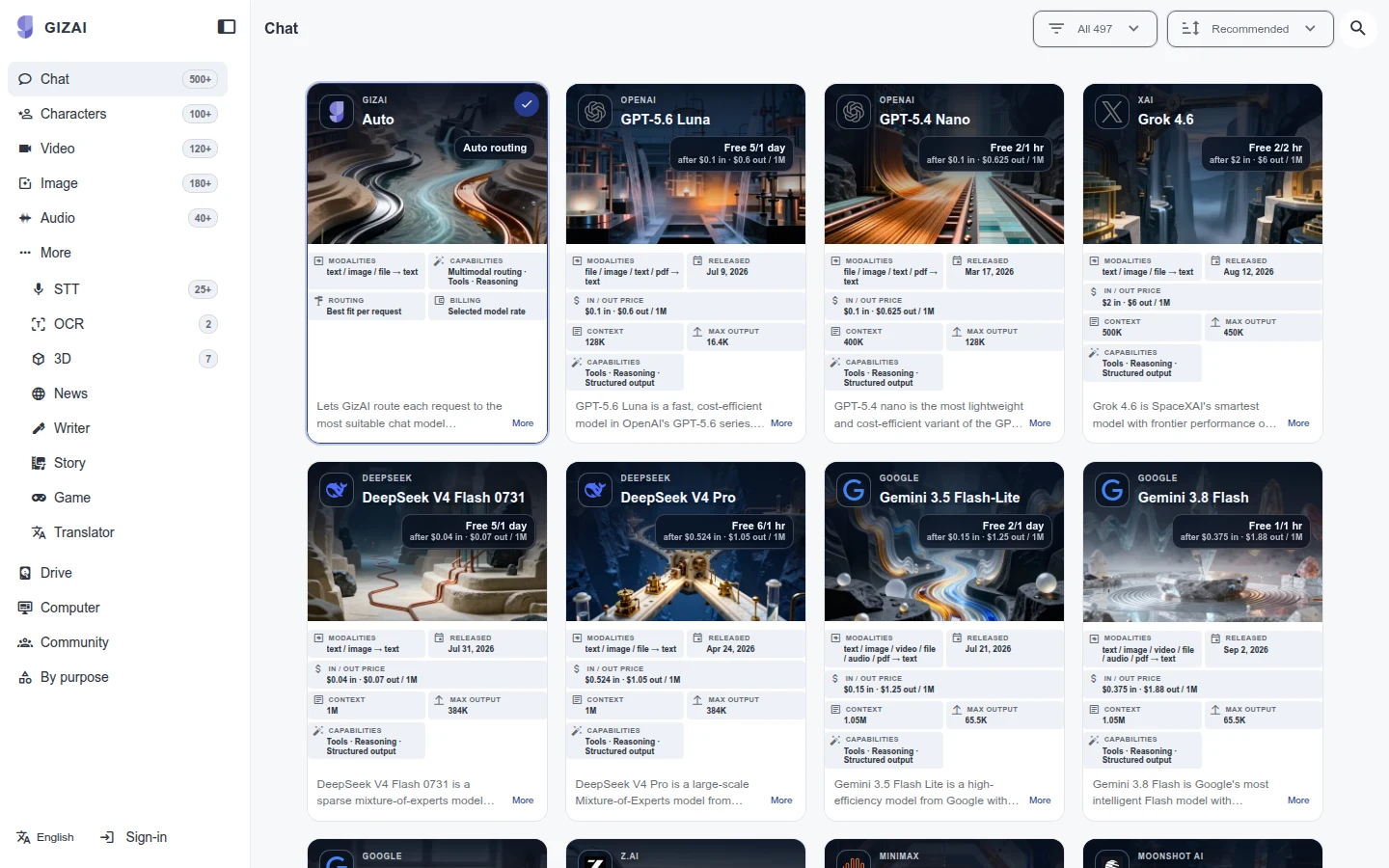
500+ Unified Model Catalog
Commercial frontier LLMs and on-premise vLLM/TRT-LLM clusters unified behind a single standard API endpoint
Real-Time Token FinOps Ledger
StarRocks OLAP sub-second usage aggregation with automated departmental and project-level Budget Hard-Caps
Intelligent Cost-Optimized Routing
Prompt complexity and SLA profiling dynamically dispatches tasks between high-velocity and frontier models, slashing token costs by 68%
Zero-Downtime Resilience
17+ global upstream provider routes with real-time health checks, circuit breaker cooldowns, and safe pre-flight failover
PRODUCT IN USE
Inspect the product in use.
Actual product screens and sample verification results. Check each caption for its capture context and select an image to inspect.
giz.systems/solutions/models
Giz Models AI model gateway & intelligent routing
Unified AI model gateway consolidating 500+ LLMs with dynamic auto-routing across performance, latency, and landed cost.
Explore this capability →giz.systems/solutions/models
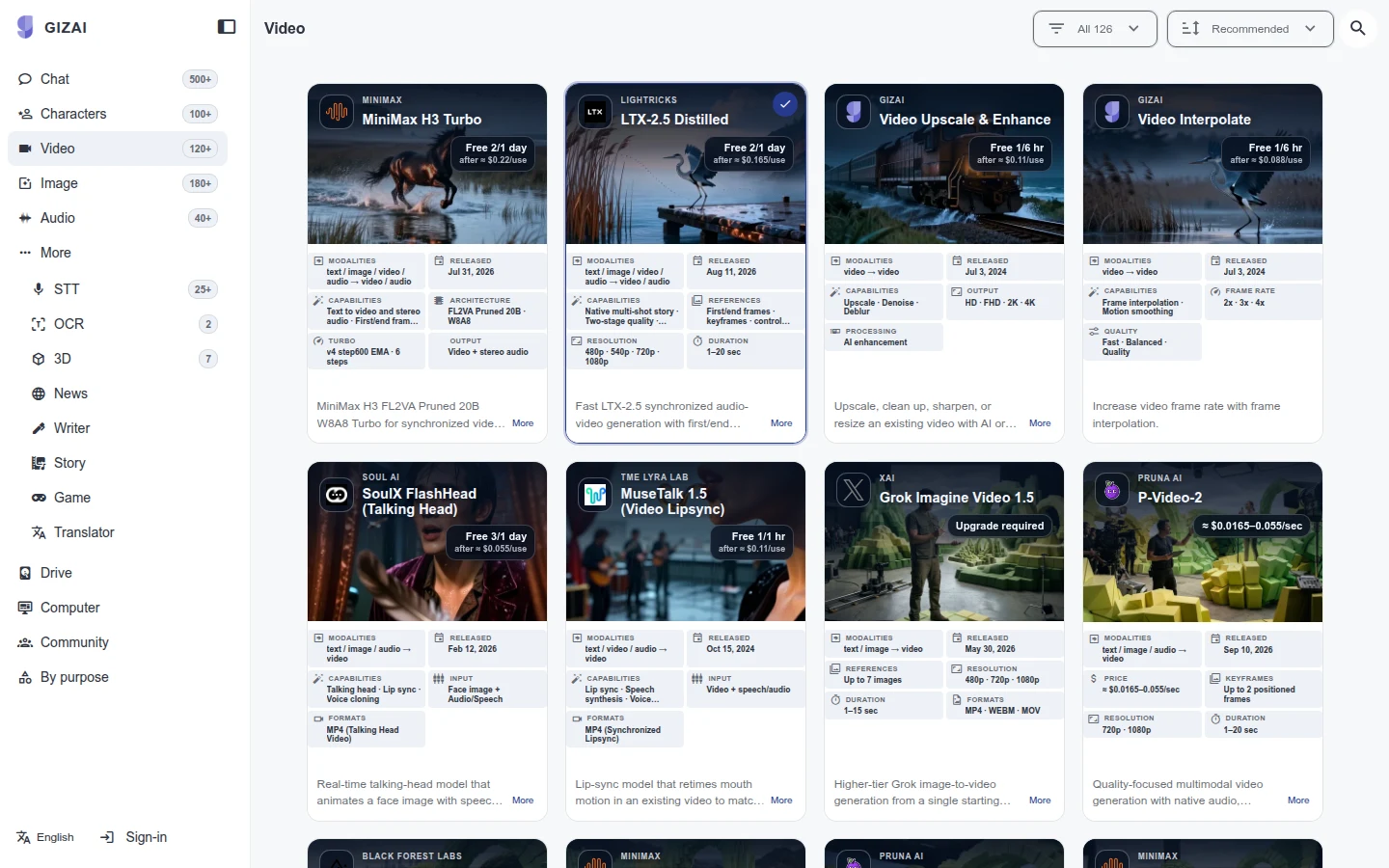
Giz Models enterprise AI video model catalog
Multimodal video generation and editing catalog hosting 120+ models with per-use transparent cost attribution.
Explore this capability →giz.systems/solutions/models
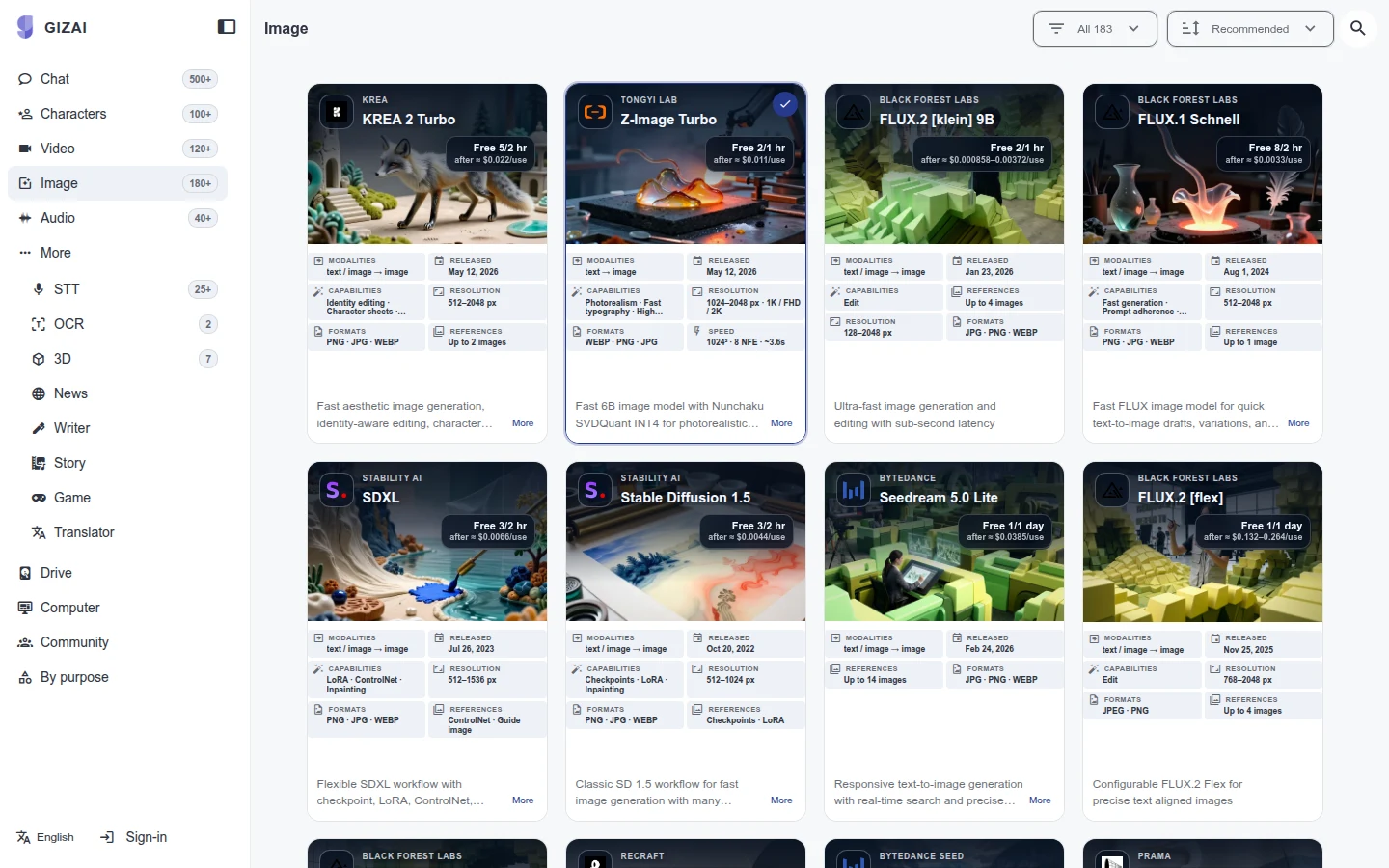
Giz Models generative AI image model catalog
High-fidelity image generation catalog offering 180+ models across photorealism, typography, and speed tiers.
Explore this capability →giz.systems/solutions/models
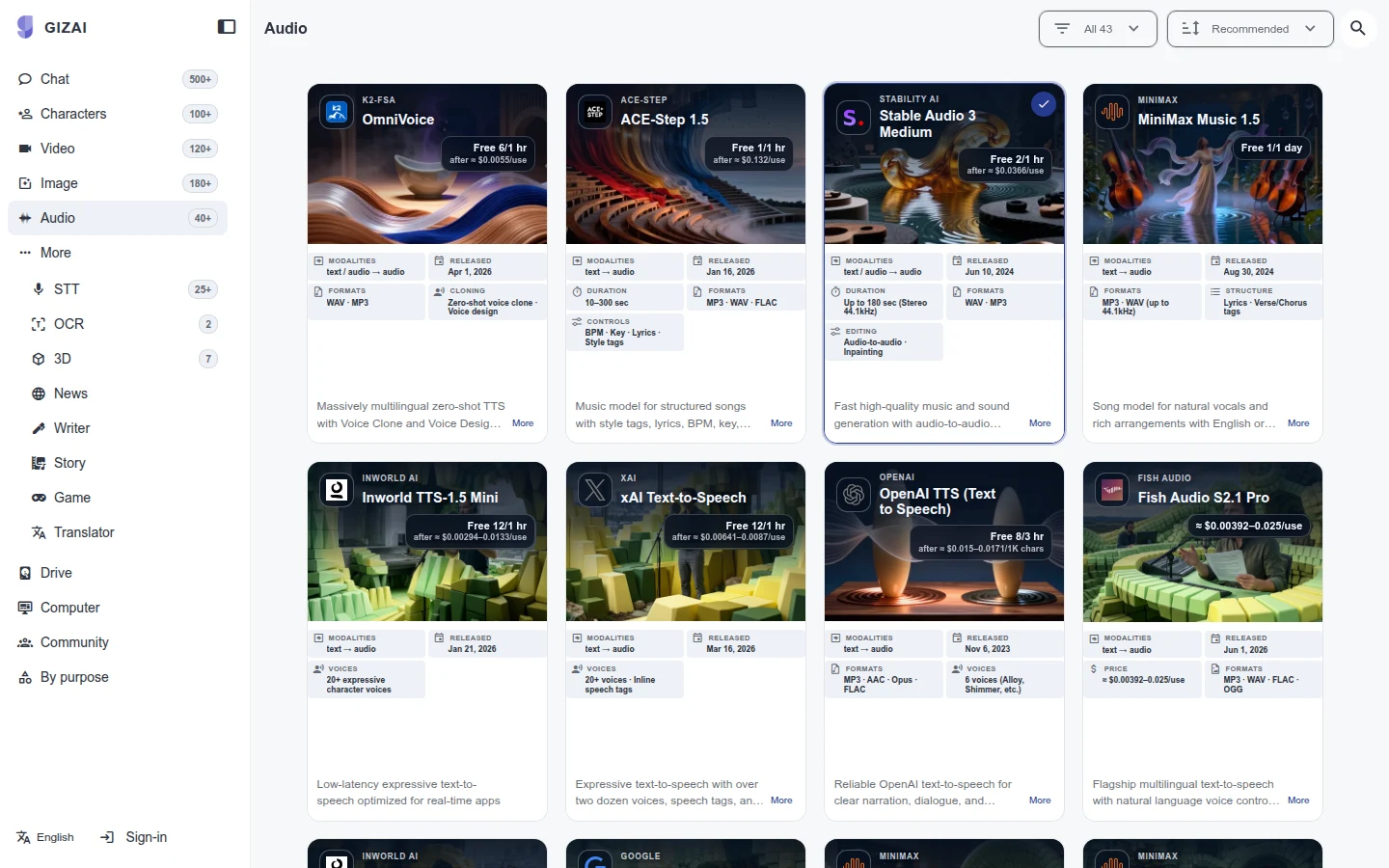
Giz Models audio, voice synthesis & TTS model catalog
Comprehensive voice synthesis, cloning, and music generation catalog with transparent per-second and character pricing.
Explore this capability →One model, connected execution
1. Ingress Security & Real-Time Quota Perimeter
Enforces mTLS mutual authentication, tenant isolation, Redis token bucket rate limits, and sub-3ms StarRocks remaining budget verification inline at the ingress gateway.
mTLS
Tenant Isolation
Token Bucket
Quota Check
2. Prompt Complexity Profiler & Cost Optimizer
Evaluates prompt token volume, syntax tree depth, domain intent, and multi-hop reasoning requirements in real time to select the optimal logical model and provider route.
Complexity Profiler
Semantic Router
SLA Engine
Cost Optimizer
3. Omni-Modal Serving & Semantic Caching Layer
Accelerates repetitive enterprise system prompts and organizational queries via embedding vector caches and Redis KV prefix caches, bypassing upstream calls entirely.
Semantic Cache
Prefix Caching
500+ Catalog
Runware
4. StarRocks OLAP Real-Time Dual-Ledger
Immutably records prompt/completion tokens, TTFT, and supplier billings (USD/CNY) normalized via daily European Central Bank (ECB) reference rates into the giz_billing_cost ledger.
StarRocks OLAP
ECB Normalization
Dual-Ledger
Hard-Cap Enforcement
From discovery to autonomous operation
01 · Enterprise AI Workload & Cost Audit
Profile departmental prompt frequencies, average context lengths, security classification tiers, and latency SLAs across all organizational business units.
02 · Unified Standard Endpoint Integration
Direct client applications to the unified API base URL and issue scoped virtual tenant API keys with departmental budget boundaries.
03 · Routing Calibration & Budget Hard-Cap Activation
Define prompt complexity scoring thresholds, model whitelists, semantic cache rules, and 80%/95%/100% tiered budget defense parameters.
04 · Real-Time Observability & Landed Cost Optimization
Continuously monitor P95 TTFT, upstream provider availability, and reconciled landed costs via the operations console to maximize compute margins.
Table of Contents
1.
Executive Summary: 1-Minute Briefing for Enterprise C-Suite — Ending Token Bill Shock and Data Leakage
2.
Eliminating Enterprise C-Suite's 2 Fatal Risks
3.
Unified 500+ Multi-LLM & Omni-Modal Infrastructure Catalog
4.
Decoupling Canonical Logical Models from Multi-Provider Routes
5.
Defense Against Token Bill Shock: StarRocks OLAP Real-Time Ledger & 3-Tier Budget Hard-Cap
6.
Intelligent 2-Tier Complexity Routing & Redis Semantic Cache
7.
FinOps Cost Optimization Simulation Model: Proven $900,000 (1.2B KRW) Annual Net Savings
8.
Regulatory Compliance & Network Isolation Governance Matrix
9.
Circuit Breakers & 99.99% Zero-Downtime Resilience
10.
Enterprise Production Deployment Case Studies (100% Anonymized)
11.
Technical Acceptance Criteria for CIO & CISO Sign-off
12.
CIO/CISO/FinOps Executive FAQ
Executive Summary: 1-Minute Briefing for Enterprise C-Suite — Ending Token Bill Shock and Data Leakage
As generative AI expands across enterprise engineering, finance, operations, customer service, and autonomous workflows, enterprise leadership (CIOs, CISOs, and FinOps Executives) faces two structural, existential threats: "Uncontrolled Token Bill Shock" and "Catastrophic Intellectual Property (IP) Exfiltration."
Giz Models is an enterprise-grade AI model gateway and real-time FinOps governance platform engineered to neutralize financial unpredictability and data sovereignty risks. It unifies over 500 commercial foundation models and private air-gapped on-premises inference clusters under a single standard API (https://api.giz.ai/v1), enforcing sub-millisecond cost accounting and complexity-driven dynamic routing inline.
+───────────────────────────────────────────────────────────────────────────────────────────+
|                           Giz Models Executive Value Matrix                               |
+───────────────────────────────────────────────────────────────────────────────────────────+
| 1. FinOps & CFO: $900,000 (1.2B KRW / 65.9%) Net Annual Savings & 100% Budget Hard-Cap    |
|    • StarRocks OLAP Real-Time Ledger: Immediate request cutoff within 50ms at 100% budget  |
|    • Redis Semantic Cache: 41.2% repetitive queries resolved at $0 via 0.98 similarity     |
|    • 2-Tier Complexity Routing: Routine queries routed to high-velocity models (-68.3% cost)|
+───────────────────────────────────────────────────────────────────────────────────────────+
| 2. CISO & SecOps: 100% Zero Data Retention (ZDR) & Air-Gapped Hybrid Routing              |
|    • Inline PII Masking: National IDs, bank accounts, and identifiers sanitized in < 0.5ms |
|    • Zero IP Exfiltration: Trade secrets and CAD schematics forced to private GPU clusters |
|    • Full Compliance: Financial Regulations, National Core Tech Act, K-ISMS-P, ISO 42001   |
+───────────────────────────────────────────────────────────────────────────────────────────+
| 3. CIO & Infrastructure: Single Endpoint, 99.99% High Availability, Zero Vendor Lock-in   |
|    • Standard OpenAI Interface: Zero code refactoring; replace Base URL and Virtual API Key |
|    • 17+ Upstream Routes: Sub-50ms transparent failover across global provider pools       |
|    • Latency & Scale: P95 TTFT improved from 520ms to 118ms (77.3%), throughput expanded 5.1x|
+───────────────────────────────────────────────────────────────────────────────────────────+
1. Eliminating Enterprise C-Suite's 2 Fatal Risks
Decentralized, departmental adoption of public AI APIs exposes enterprises to severe financial and regulatory liabilities.
Risk 1: "Uncontrolled Token Bill Shock from Autonomous Agents and Workforce LLM Usage"
- Root Cause: Developers and autonomous agents frequently direct routine tasks (summaries, translations, JSON extraction) to costly flagship models (GPT-5.6, Claude Opus, Grok 4). When agents enter recursive loops or process bulk files without controls, unbudgeted six-figure invoices accumulate within days.
- Giz Models Solution:
- StarRocks OLAP Real-Time Ledger (
giz_billing_cost): Streams usage metrics at sub-second speeds, tracking exact prompt/completion tokens and currency costs per department. - 3-Tier Budget Hard-Cap: Triggers 80% Soft Alerts, 95% Hard Alerts, and strictly terminates requests within 50ms at 100% budget threshold (HTTP 402 Payment Required), reducing unbudgeted overruns to $0.
- Intelligent 2-Tier Complexity Routing: Automatically evaluates prompt difficulty, routing simpler tasks to high-efficiency models (slashing token unit costs by 68.3%).
- Redis Semantic Cache: Resolves 41.2% of repetitive queries from memory cache at exactly $0.
- StarRocks OLAP Real-Time Ledger (
Risk 2: "Proprietary Schematics, Semiconductor Recipes, and Financial Ledgers Ingested by Public Cloud LLMs"
- Root Cause: Employees inadvertently paste 3D CAD metadata, semiconductor fabrication recipes, cost balance sheets, and M&A audit materials into public prompts, exposing enterprise trade secrets to foreign infrastructure and model retraining pipelines.
- Giz Models Solution:
- Mandatory Zero Data Retention (ZDR): Routes public traffic strictly through enterprise B2B agreements that legally and technically forbid disk retention or model retraining.
- Inline Real-Time PII & Secret Masking: Scans and anonymizes sensitive data and confidential tokens within 0.5ms at ingress.
- Air-Gapped Hybrid Routing: Automatically detects Level-1 confidential assets and forces execution to private on-premises GPU/NPU clusters (
infrastructure), preventing external network transit.
2. Unified 500+ Multi-LLM & Omni-Modal Infrastructure Catalog
Giz Models normalizes fragmented vendor SDKs and proprietary authentication protocols into a single OpenAI-compatible standard interface (https://api.giz.ai/v1).
+-----------------------------------------------------------------------------------+
|                            Enterprise Applications                                |
|         (ERP, CRM, Dev Tools, Data Analytics, Autonomous Agent Workspaces)       |
+-----------------------------------------------------------------------------------+
                                         │
                 HTTPS / REST / WebSocket / mTLS (Strict JSON Schema)
                                         ▼
+-----------------------------------------------------------------------------------+
|                        Giz Models Enterprise Gateway                              |
|  ┌───────────────────┐  ┌─────────────────────┐  ┌─────────────────────────────┐  |
|  │ Ingress & API Key │  │  Semantic Routing & │  │  StarRocks Real-Time Ledger │  |
|  │ Tenant Auth & PII │  │  Complexity Engine  │  │  Budget Hard-Cap Enforcement│  |
|  └───────────────────┘  └─────────────────────┘  └─────────────────────────────┘  |
+-----------------------------------------------------------------------------------+
             │                                       │
             ▼                                       ▼
+──────────────────────────────+   +────────────────────────────────────────────────+
|   Public Frontier Model Pool |   |   Private On-Premises & Sovereign Cluster      |
|   (17+ Multi-Provider Route) |   |   (Zero Egress / Air-Gapped Network Topology)  |
|  • OpenAI Direct, OpenRouter |   |  • NVIDIA HGX H100/H200/B200 (vLLM, TRT-LLM)   |
|  • Google Gemini, Anthropic  |   |  • Rebellions ATOM / FuriosaAI RNGD NPU Pool   |
|  • DeepSeek Pro / Grok 4.6   |   |  • Triton Inference Server (Local Weights)     |
|  • Runware (Flux, MiniMax)   |   |  • Enterprise Local Milvus / Qdrant RAG        |
+──────────────────────────────+   +────────────────────────────────────────────────+
Omni-Modal Serving Catalog Technical Specifications
| Modality Domain | Model Count | Representative Model Families | Technical Capabilities & Standards | Cost & Attribution Unit |
|---|---|---|---|---|
| Chat & Reasoning | 500+ Models | GPT-5.6, Claude 3.7 Sonnet, DeepSeek V4 Pro, Gemini 3.8 Flash | Multi-step reasoning tokens, JSON Structured Outputs, Tool/Function Calling | Per 1,000 Prompt / Completion Tokens |
| Video Generation | 120+ Models | MiniMax H3 Turbo, LTX-2.5 Distilled, CogVideoX-5B, SoulX | 4K video upscaling, frame interpolation, text/image-to-video, lipsync | Per Rendered Frame / Second / Resolution |
| Image Generation | 180+ Models | KREA 2 Turbo, Z-Image Turbo, FLUX.2, FLUX.1 Schnell, SDXL | Reference Image Control, inpainting/outpainting, typography text rendering | Per Image Resolution and Step Count |
| Audio & Speech | 40+ Models | OmniVoice, Stable Audio 3, MiniMax Music, OpenAI Whisper/TTS | Zero-shot voice cloning, real-time STT streaming, background music synthesis | Per Audio Second and Character Count |
| 3D Asset Modeling | 7+ Models | TRELLIS.2, Tripo 3D, Hunyuan 3D 2.0, Meshy-6 | Rapid 3D polygon mesh generation, GLB/FBX/OBJ physically based rendering | Per Generated Asset and Polygon Density |
Operational Evidence Links:
- Real-time conversational health and token streams are monitored alongside P95 latencies via
models-chat-screen.- High-volume video and generative media pipelines reconcile per-second compute costs through
models-video-screen.- On-premises air-gapped compute topologies and rack configurations are audited via
infrastructure.
3. Decoupling Canonical Logical Models from Multi-Provider Routes
Hardcoding third-party vendor URLs into enterprise software creates severe operational vulnerabilities when an upstream provider experiences outages or alters API contracts.
Giz Models separates requested Canonical Logical Models from physical Multi-Provider Routes. Behind a single model (such as DeepSeek V4 Pro), the gateway balances traffic across 17+ upstream providers (OpenAI Direct, OpenRouter, AKRouter, LinkAPI, CCGO, Tokeness, DeepInfra) using a 4-factor scoring algorithm calculated every 5ms:
- Rolling P95 TTFT (Time-to-First-Token): Prioritizes routes delivering the fastest initial streaming token over the preceding 60 seconds.
- Dynamic Availability Score: Exclusively routes to endpoints with >= 99.9% HTTP 200 success rates over the last 1,000 calls.
- Circuit Breaker Cooldown: Instantly isolates providers generating 3+ HTTP 429 or credit exhaustion errors into a 3-minute cooldown.
- Effective Landed Cost (ECB Normalized): Dispatches requests to the lowest net cost route after accounting for real-time exchange rates and volume tiers.
Model Integrity Principle: Giz Models never arbitrarily downgrades user-requested models to inferior alternatives without explicit application authorization. Traffic fails over strictly across verified providers serving the exact same model weights.
4. Defense Against Token Bill Shock: StarRocks OLAP Real-Time Ledger & 3-Tier Budget Hard-Cap
Traditional proxy gateways rely on delayed batch logging, allowing runaway scripts to drain hundreds of thousands of dollars before alerts trigger. Giz Models embeds a distributed StarRocks OLAP engine to ingest token transactions sub-second and enforce hard budget stops inline.
3-Tier Budget Hard-Cap Policy
[Inbound API Request] ──> [Redis Token Bucket: Rate Limit Verification]
                               │ Passed
                               ▼
        [StarRocks Sub-Second Aggregation (< 3ms)]
        SELECT SUM(landed_cost_usd) FROM giz_billing_cost
        WHERE department_id = 'dept-fin-01' AND recorded_at >= '2026-09-01';
                               │
            ┌──────────────────┼──────────────────┐
            │ < 80% Budget     │ 80% ~ 99% Budget │ >= 100% Budget Cap
            ▼                  ▼                  ▼
     [Normal Execution]  [Soft Alert]       [Budget Hard-Cap Enforcement]
     High-speed routing   Slack/Email notice Immediate cutoff within 50ms (HTTP 402)
                         Finance team alert  Fallback to private local model
                                            or await executive budget increment
- 80% Consumed (Soft Alert): Issues automated webhook notifications (Slack, Teams, Email) to department leads regarding spend velocity.
- 95% Consumed (Hard Alert): Requires explicit approval headers for frontier models and diverts non-urgent batch requests to queued execution.
- 100% Consumed (Budget Hard-Cap): Physically blocks incremental calls within 50ms (returning HTTP 402 Payment Required). Unapproved overruns are stopped completely, with optional fallback routing to free internal on-premise models.
giz_billing_cost Dual-Ledger StarRocks Schema
CREATE TABLE giz_billing_cost (
    event_id VARCHAR(64) NOT NULL,
    recorded_at DATETIME NOT NULL,
    organization_id VARCHAR(64) NOT NULL,
    department_id VARCHAR(64) NOT NULL,
    project_id VARCHAR(64) NOT NULL,
    api_key_id VARCHAR(64) NOT NULL,
    logical_model VARCHAR(128) NOT NULL,
    provider_route VARCHAR(64) NOT NULL,
    prompt_tokens INT NOT NULL,
    completion_tokens INT NOT NULL,
    reasoning_tokens INT DEFAULT 0,
    cached_tokens INT DEFAULT 0,
    upstream_currency VARCHAR(3) NOT NULL, -- USD, CNY, etc.
    upstream_unit_cost DECIMAL(18, 8) NOT NULL,
    ecb_exchange_rate DECIMAL(12, 6) NOT NULL, -- European Central Bank Daily Reference Rate
    landed_cost_usd DECIMAL(18, 8) NOT NULL,   -- Normalized Real Net Cost
    latency_ttft_ms INT NOT NULL,
    latency_total_ms INT NOT NULL,
    http_status_code INT NOT NULL
) ENGINE=OLAP
PRIMARY KEY(event_id, recorded_at, organization_id)
PARTITION BY DATE_TRUNC('month', recorded_at)
DISTRIBUTED BY HASH(department_id) BUCKETS 32
PROPERTIES (
    "replication_num" = "3",
    "storage_medium" = "SSD"
);
- European Central Bank (ECB) Reference Rate Integration: Normalizes heterogeneous currency billings (USD, CNY) daily into standard USD, eliminating currency drift in global corporate accounting.
5. Intelligent 2-Tier Complexity Routing & Redis Semantic Cache
Most corporate tasks (summarization, translation, format extraction) do not require expensive frontier models. Giz Models analyzes inbound prompts within 0.5ms via in-memory Abstract Syntax Tree (AST) profiling to route workloads efficiently.
2-Tier Routing Pipeline
[Inbound Prompt Received] ──> [0.5ms AST / Token Complexity Profiler]
 • Token length (< 1,000 vs long-context) / Multi-hop reasoning indicators
 • Code AST inspection (snippet vs refactoring) / JSON Schema nesting depth
         │
         ├─────────────────────────────────────────┐
         │ Complexity Score < 40                   │ Complexity Score >= 40
         ▼                                         ▼
[Tier-1: High-Velocity Efficient Models]      [Tier-2: Flagship Deep Reasoning Models]
 • DeepSeek V4 Flash / Gemini 3.8 Flash    • GPT-5.6 / Claude 3.7 Sonnet
 • On-premise Private NPU (Llama-3.3-8B)   • DeepSeek V4 Pro (Reasoning Mode)
 • P95 TTFT: 90ms ~ 150ms                  • P95 TTFT: 450ms ~ 900ms
 • Cost / 1M Tokens: $0.15 ~ $0.40         • Cost / 1M Tokens: $3.00 ~ $15.00
Redis Semantic Prompt Caching
Repetitive enterprise queries (policy handbooks, customer FAQs, boilerplate templates) are indexed in a Redis vector store. Prompts with >= 0.98 cosine similarity bypass upstream providers entirely, returning results within 5ms at exactly $0 cost.
6. FinOps Cost Optimization Simulation Model: Proven $900,000 (1.2B KRW) Annual Net Savings
This simulation reflects production telemetry from an enterprise deploying 10,000 employees and 50 autonomous agents generating 150 million tokens per month.
Baseline vs. 3-Stage Giz Models Optimization
[Baseline Unmanaged Spend]
 • Monthly Volume: 150,000,000 tokens (100M prompt tokens + 50M completion tokens)
 • Standard Approach: Unregulated direct routing to commercial flagship models ($7.50 / 1M tokens)
 • Monthly Spend: $112,500 USD (approx. 151.8M KRW)
 • Annual Baseline Spend: $1,350,000 USD (approx. 1.82B KRW)

[Giz Models 3-Stage Optimization Breakdown]
 1. Redis Semantic Cache: 41.2% of queries resolved at $0
    -> Paid Workload Remaining: 58.8% (88.2M tokens/month)
    -> Annual Savings from Caching: $556,200 USD (approx. 750M KRW)
 2. 2-Tier Complexity Routing: 70% of remaining volume routed to Tier-1 models ($0.30 / 1M tokens)
    -> Tier-2 Frontier Workload ($7.50 / 1M): 26.46M tokens/month ($198,450/year)
    -> Tier-1 High-Velocity Workload ($0.30 / 1M): 61.74M tokens/month ($22,226/year)
 3. Multi-Provider Landed Cost Optimization: Lowest provider routing and ECB normalization yield 8.5% savings
    -> Final Annual Net Spend: $460,000 USD (approx. 621M KRW)
Quantitative Before / After Performance Matrix
| Metric | Baseline (Unmanaged Flagship) | Giz Models Production | Net Impact & Savings |
|---|---|---|---|
| Annual AI Infrastructure Spend | $1,350,000 USD (1.82B KRW) | $460,000 USD (621M KRW) | $890,000 ~ $900,000 USD Net Savings (65.9%) |
| Effective Cost / 1M Tokens | $7.50 / 1M tokens | $2.55 / 1M tokens | 66.0% unit cost reduction |
| Zero-Cost Semantic Cache Hit Rate | 0.0% (100% billed externally) | 41.2% (Instant $0 reply) | $556,200/year repetitive cost eliminated |
| Budget Overrun Incidents | 2.4 / quarter (Up to $30k over) | 0 incidents (50ms Hard-Cap) | 100% financial overrun prevention |
| P95 Latency (TTFT) | 520 ms | 118 ms | 77.3% response acceleration |
| Concurrent Throughput Capacity | 42 req/sec | 215 req/sec | 5.1x system capacity expansion |
| Payback Period & ROI | - | 3.5 Months | 342% Net Annual ROI |
7. Regulatory Compliance & Network Isolation Governance Matrix
| Framework & Statute | Core Mandates & Regulatory Focus | Giz Models Technical Implementation | CISO Compliance Artifacts |
|---|---|---|---|
| Electronic Financial Regulations | Segregation of internal networks from public WAN; prohibition of customer financial leaks | In-line PII redaction; financial data restricted to on-premise air-gapped vLLM nodes | Gateway mTLS audit trails and routing decision logs |
| Personal Information Protection | De-identification and prohibition of unauthorized overseas data transfers | Regex and tokenizer-based masking of National IDs, phone numbers, and IBANs in < 0.5ms | Bi-directional packet de-identification audit logs |
| National Core Technology Act | Export ban on strategic technologies (semiconductors, secondary batteries, displays) | Keyword-triggered egress block routing sensitive IP exclusively to internal GPU clusters | Zero WAN egress policy proofs and local execution logs |
| Zero Data Retention (ZDR) | Prohibition of prompt ingestion for third-party commercial model training | Enforces dedicated enterprise B2B ZDR endpoints with persistent disk writes disabled | Signed CSP B2B enterprise ZDR certificates |
| ISO 27001 / ISO 42001 | Information Security & Artificial Intelligence Management Systems (AIMS) | Granular tenant RBAC, model catalog change management, immutable StarRocks logs | 5-year immutable WORM audit repository |
| K-ISMS-P Certification | Cloud AI assessment and strict data lifecycle boundaries | Scoped virtual tenant keys, TLS 1.3 encryption, separation of duties for administration | Penetration test logs and compliance sign-offs |
8. Circuit Breakers & 99.99% Zero-Downtime Resilience
- HTTP 429 & Credit Exhaustion Isolation: When an upstream provider generates 3+ consecutive rate-limit or credit errors in 1 second, the route is immediately flagged for a 3-minute cooldown in Redis.
- Safe Pre-Flight Failover: Network timeouts, DNS anomalies, and 5xx errors during client handshakes trigger transparent retries to secondary providers within 50ms without user interruption.
- Idempotency & Duplicate Charge Prevention: Once token streaming begins, upstream timeouts cleanly terminate the session to prevent double-billing and duplicate generation.
9. Enterprise Production Deployment Case Studies (100% Anonymized)
Global High-Tech Manufacturer A
- Challenge: 12,000 engineers and researchers procured individual public LLM subscriptions, driving hundreds of thousands in monthly unallocated token bills with high IP leakage risks.
- Implementation: Deployed Giz Models with virtual tenant keys, activated Dynamic Routing, and integrated an 8-node on-premise vLLM cluster.
- Results: Monthly token expenditures declined by 64.2%, 72% of routine queries shifted to high-velocity models improving development speeds by 65%, and proprietary recipes remained strictly within private GPU racks.
Major Financial Group B
- Challenge: Stringent financial supervisory regulations barred internet-connected LLMs for corporate credit assessments, while unmonitored batch scripts caused recurring token billing overruns.
- Implementation: Deployed StarRocks real-time token ledgering with 100% Budget Hard-Caps, combining public ZDR routes with on-premises Triton inference servers.
- Results: Identified runaway batch calls in 30ms to trigger immediate Hard-Cap cutoffs with zero budget leakage, immutably ledgered all TTFT and landed costs, and passed financial audit reviews seamlessly.
10. Technical Acceptance Criteria for CIO & CISO Sign-off
| Evaluation Domain | Verification Criteria | Test Scenario & Methodology | Passing Requirement |
|---|---|---|---|
| FinOps Control | StarRocks reconciliation accuracy and Hard-Cap response time | Injected 10,000 concurrent calls exceeding monthly budget ceiling | Hard-Cap terminates additional calls within 50ms (HTTP 402) |
| Gateway Latency | Intrinsic gateway proxy overhead | Measured inline profiling latency at P95 across 100,000 requests | Total gateway overhead maintained below 5ms |
| System Resilience | Automatic failover under upstream vendor disruption | Injected chaos engineering faults (HTTP 500 / 5s latency) into primary route | Zero client errors; failover completed to backup route in < 100ms |
| Data Sovereignty | PII redaction accuracy and ZDR enforcement | Injected synthetic PII tokens and proprietary code keywords into test prompts | 100% inline sanitization; sensitive calls routed to private nodes |
11. CIO/CISO/FinOps Executive FAQ
Q1. How does Giz Models manage departmental budget segregation and automated accounting chargebacks under a unified enterprise gateway?
Giz Models issues hierarchical Scoped Virtual API Keys per department and project under a master enterprise account. Each transaction immutably records department_id, project_id, and user_id_hash into the giz_billing_cost StarRocks ledger, converted to landed currency costs via daily European Central Bank (ECB) exchange rates. At month-end, finance teams generate one-click internal chargeback invoices reconciling directly with ERP general ledgers.
Q2. How do we guarantee that dynamic complexity routing will not misclassify critical business queries to inferior models?
The Dynamic Router evaluates prompts using a multi-dimensional AST parser assessing reasoning keywords, JSON schema nesting, code depth, and multimodal assets. Enterprise applications can override the router by providing the X-Giz-Routing-Policy: strict-frontier request header, guaranteeing dispatch to flagship models. For standard workloads, the system selects models that strictly meet predefined SLA latency and response quality thresholds.
Q3. Can you mathematically guarantee zero budget overruns when the 100% Hard-Cap triggers within 50ms?
Yes. Giz Models synchronizes distributed Redis in-memory token counters with the StarRocks OLAP engine. Ingress gateways perform an inline pre-flight budget check before initiating upstream handshakes. Once the 100% threshold is reached, new requests are rejected within 50ms with HTTP 402 (Payment Required). Aside from residual sub-cent streaming tokens on the active in-flight request, unbudgeted leakage is completely halted.
Q4. What contractual and technical guarantees ensure commercial providers (OpenAI, Anthropic) do not use our data for model training?
Giz Models strictly excludes consumer-grade endpoints. The gateway interfaces exclusively with dedicated B2B enterprise agreements with verified Zero Data Retention (ZDR) clauses. Ingress traffic undergoes inline PII sanitization, outbound headers inject persistent data-opt-out flags, and third-party SOC 2 / ISO 27001 audit attestations are supplied directly to the CISO security team.
Q5. What is the engineering effort and migration timeline to integrate Giz Models into legacy enterprise systems (SAP ERP, Spring Boot, Django)?
Giz Models adheres strictly to the standard OpenAI REST API specification. Existing applications require zero source code changes: teams update only the API Base URL (https://api.giz.ai/v1) and the Virtual API Key in their environment configuration. Enterprise migrations typically conclude within 5 business days from initial PoC to enterprise-wide rollout.
AI Models & Infrastructure Operations Console · Sovereign AI & Air-Gapped Deployment · Real-Time Analytics & BI
Ask Giz Agent
Consult published material and prepare a technical draft.